
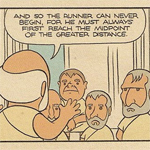
 From Dell to EdX, Columbia Sportswear to Red Bull -- advertising is increasingly less about claiming value, and more about delivering it through memorable experiences. That's the secret behind Zeno's Paradox of Marketing.
Zeno’s Marketing Paradox: Native Advertising as a Ramp To Customer Experience
Why No One is an Agency Anymore, and Why No One Cares
 I've been seeing quite a few agencies claiming to be "anti-agencies". There are lots of reasons why the agency business model should evolve, but new ways of creating value rarely start with positioning.
Customer Experience Makes Five Guys the Top Ranked Burger in the US
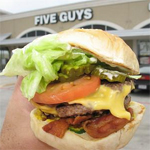 The burger business is a big deal in the United States. A small chain, Five Guys Burgers and Fries has jumped to the head of burger pack - and the did it without advertising, one meal at a time.
Best job ever? Usability Testing Bartender
 I've seen the future of usability; it has a buzz on. Watch this funny video and grasp the genius of testing users under the influence. See why I want to be your bartender of usability testing.
Companies with Top Customer Experiences Out-Score Super Bowl Advertisers
 A quick look at revenue growth over three years shows that companies loved by their clients grew more than twice as fast as Super Bowl advertisers.
What I Found at Caine’s Arcade, a Few Minutes of Fun
 This Spring, Caine Monroy became famous in some parts because of his cardboard arcade. Patricia Yuse visited the arcade, and shares some thoughts about what causes viral movements to grow.
Amanda Palmer Won’t Settle for Less. Monitizing engagement is just the start.
 Amanda Palmer's Kickstarter triumph is awesome-ball cool, but it's just the start. The real magic is what you can do with a business model based on fan love.
Quotes and Photos from Keynoting The Future of Digital Marketing in London
 What's the future of digital marketing? Get a taste of the discussion from my presentation on the era of mobile and application marketing last week in London.

The Unchecked Power of Immunity: President Trump’s Move Toward Kleptocracy
January 24th 2025
Given new broad Presidential immunity, and that President Trump will never face voters again, what if anything restrains him from pursuing his self-interest openly and exclusively? Trump’s inauguration, diplomacy, cryptocurrency advocacy and blanket pardons to January 6th rioters show the aggregation of wealth and extra-judicial power is his first order of business.

TikTok vs. Privacy: The Case for National Security and Personal Privacy
January 20th 2025
A unanimous ruling by the US Supreme Court is a tip-off that more is at stake in forcing privacy standards on TikTok than nationalism, political tribalism or a love of cat videos. Here is my case in support of forcing the sale of TikTok to an entity which can credibly promise user privacy and adherence to US law.

Humanity is skating through Gaza.
September 5th 2024
Hopefulness is the anomaly of humanity, which emits moments of illuminated joy surrounded by the eternity of night. This is my requiem for 10-year-old Tala Abu Ajwa who died with her skates on, and my sympathy for her parents who gave her moments of childhood in war.

A “Help the Police” Scam: Introducing America’s Founding Father of Fundraising Grift
July 15th 2024
I started out trying to understand a fraudulent fundraising appeal sent to my mother-in-law, found my way to their federal filings and eventually to Richard Viguerie, America’s Founding Father of Fundraising Grift. What did *you* do on your summer holiday?

Why Student Protesters Focus on Divestment and Gaza Rather Than Ukraine
April 27th 2024
This week, protests and police actions swept campuses across the US, but these seem more focused on addressing campus issues than stopping war or casualties. And why Gaza rather than Ukraine? I try to make sense of this all as it happens.
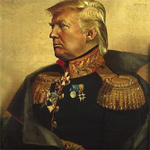
Trump’s first criminal trial is about election interference; framing it as “hush money” hides this.
April 18th 2024
This hush-money framing does the case a disservice. It makes it seem lurid and less consequential than those involving the constitutional order of government or divulging intelligence secrets. It presents an intimate, tidy, and contained narrative, which also is false.

Criminality piles-up around Truth Social. Is DJT the first political stock?
April 5th 2024
Fraud and insider trading may be just the start. There’s a tie to perjured Biden bribery testimony, and apparently one inside trader make a large loan to Truth Social. Get the details.

Can a Commercial Care System Really Take on Disparities Rooted in Economics?
September 29th 2022
Health disparities are driven by both inequity in care, and the social-economic factors that bring people to it. This post provides data suggesting care leaders most address both – factors within care, and before care.

Yes, body count is exactly what it takes to make some kinds of changes
August 21st 2022
As we think about taking-on inaction on larger topics, such as global warming, it is not only fair to ask “how many must die before we get serious” – it may be *the* essential question to ask.

GOP’s deal with the Devil leads to this week’s fatwa against the FBI
August 13th 2022
This week the GOP issued a fatwa to violently oppose the FBI. From former President, to official and media the call was amplified, in a party which has waited for generations to ‘use the guns’. This isn’t random; it is not hidden, and its not over.
About Dave Wieneke, Digital Strategist
 The future of digital experiences will be built by strategists who grasp the full array of emerging business, social, and technical models. Specialties in user experience, branding, application design, and data science are laying the foundation for richer user experiences and business models breakthrough products and revenue based marketing.
UsefulArts is a soapbox to discuss the front line of digital experience, and the agencies and platforms that enable it. Digital business needs a cadre of leaders who can connect c-level enterprise thinking with the ways these new interaction models can help organizations to matter more to their most important stakeholders.